Commercial Property With No ABSD: Who It Suits and What It Really Costs
If you already own a home in Singapore, buying a second condo now costs 20% to 65% extra in Additional Buyer’s Stamp Duty (ABSD). Offices, shops and industrial units are not residential property, so ABSD does not apply to them at all. This guide explains who commercial property suits, what you actually pay, how the rental income works and where the catches are.
- ABSD: 0% on offices, shops and industrial units, for citizens, PRs, foreigners and companies alike.
- You still pay: Buyer’s Stamp Duty, plus 9% GST if the seller is GST-registered (most developers are).
- SSD: none on offices and shops. Industrial units carry SSD if you sell within 3 years.
- CPF: cannot be used. You need cash plus a bank loan.
- Best for: people who want rental income or their own business premises, and can hold for the long term.
How Much ABSD You Avoid
ABSD only applies to residential property. These are the rates for buying a home, in force since 27 April 2023 and unchanged in 2026, compared with commercial property:
| Buyer | 1st home | 2nd home | 3rd+ home | Office / shop / industrial |
|---|---|---|---|---|
| Singapore Citizen | 0% | 20% | 30% | 0% |
| Permanent Resident | 5% | 30% | 35% | 0% |
| Foreigner | 60% | 60% | 60% | 0% |
| Company / entity | 65% | 65% | 65% | 0% |
Worked example: $2.17M purchase, Singapore Citizen who already owns a home
Buyer’s Stamp Duty about $78,100 plus ABSD of $434,000 (20%).
Buyer’s Stamp Duty only. No ABSD. 9% GST (about $195,300) is added if the seller is GST-registered. A GST-registered company can usually claim it back.
Stamp duty figures use IRAS rates for a price of $2.17M (the residential and non-residential BSD tiers give the same amount at this price). Check the figures for your own case with your lawyer or IRAS.
Who Buys Commercial Property Instead of a Second Home
Home owners building a portfolio
You keep your home and add an income-producing asset, without paying 20% or 30% ABSD on a second home.
Foreigners and PRs
A foreigner pays 60% ABSD on any home. Commercial property is open to foreign buyers with no ABSD and no special approval.
Companies and family offices
Companies pay 65% ABSD on residential property. Holding offices or shops in a company avoids this, and GST on the purchase can often be recovered.
Business owners who rent
Instead of paying rent to a landlord, buy your own premises. Your company then builds up an asset instead.
Office, Shop or Industrial: Key Differences
“Commercial” is used loosely. For tax and usage rules, offices and shops are treated differently from industrial units.
| Strata office | Retail shop | Industrial (B1 / B2 / food factory) | |
|---|---|---|---|
| ABSD | None | None | None |
| SSD when selling | None | None | 15% / 10% / 5% if sold in year 1 / 2 / 3 |
| Who can occupy | Office users | Retail, F&B and services | Approved industrial users only. Investors must lease to eligible industrial tenants |
| Typical tenure | Freehold or 99 years | Freehold or 99 years | Private land can be freehold. JTC land is often around 30 years |
| Main appeal | Clean, easy-to-manage income | Footfall-driven rents | Lower psf, owner-operators |
Industrial units come with usage rules: the main activity must be industrial, and ancillary office space is limited. Short-lease industrial projects on JTC land may also have conditions on subletting and resale. Check these before you buy, especially if you plan to rent the unit out.
The Full Cost of Buying Commercial Property
Upfront
- Buyer’s Stamp Duty at non-residential rates: 1% on the first $180,000, 2% on the next $180,000, 3% on the next $640,000, 4% on the next $500,000 and 5% on the rest.
- GST at 9% on the price when the seller is GST-registered. This includes developers and many corporate sellers. If your buying company is GST-registered, it can usually claim the GST back.
- Legal fees and, for tenanted units, a check on the tenancy agreements.
Financing & holding
- No CPF. Commercial property must be paid for with cash and a bank loan.
- TDSR applies. If you borrow as an individual, the loan counts towards your 55% Total Debt Servicing Ratio. Companies are assessed on their own income.
- Property tax for non-residential property is 10% of the annual value, with no owner-occupier discount.
- Maintenance fees to the MCST, usually charged per square foot each month, plus GST.
For loan limits and how TDSR affects what you can borrow, see the financing guides at patkoproperty.com.
How the Rental Income Works
Commercial property is usually bought for income. A few things decide whether that income is good:
- Gross yield is the annual rent divided by the price. In late 2026, newer strata offices in city-fringe locations such as Jalan Besar are leasing at about $6 to $7 psf a month. That works out to a gross yield of around 2.5% to 2.8% at today’s developer prices.
- Net yield is lower. Subtract maintenance fees, the 10% property tax and any months the unit sits empty.
- Lease expiry matters. Buying a tenanted unit gives you rent from day one, but check when the lease ends and whether the rent matches today’s market.
- Tenant demand depends on location. Units near MRT stations and established business areas usually let faster.
Yields on industrial units tend to be higher than on offices, but industrial units come with SSD, usage rules and, on JTC land, shorter leases. Freehold offices usually give lower yields in exchange for a title that does not run down.
The Catches You Should Know
Harder to sell quickly
There are fewer commercial buyers than home buyers, so selling can take longer, especially in a weak market.
Prices move with the economy
Office and industrial demand follows business conditions more closely than housing does.
Vacancy risk
An empty office still costs you maintenance fees, property tax and loan payments.
GST cash flow
If you are not GST-registered, the 9% GST on a developer sale is a real cost, not a refundable one.
Commercial and Industrial Launches Open Now
These are the commercial and industrial projects we currently cover. Each page has the latest prices, unit availability and floor plans.
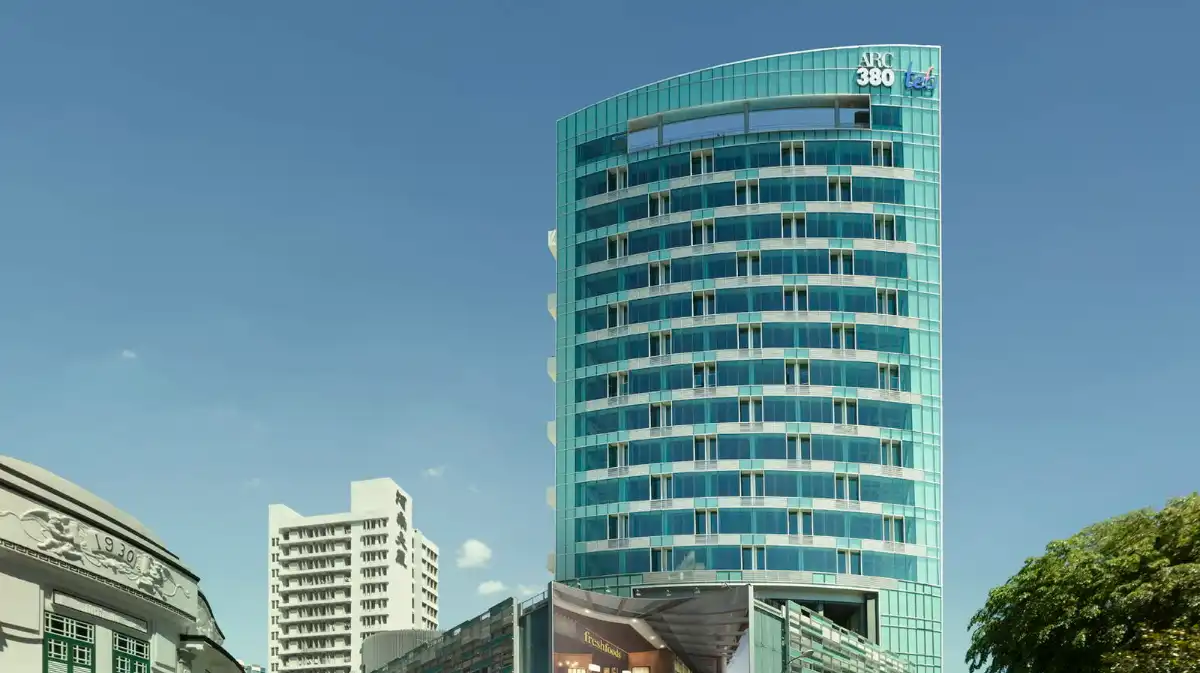
ARC 380
Final developer units in a completed 2018 office building with a rooftop pool and gym. Many units come with tenants already paying rent. From about $2.17M.
Freehold B1 · Upper Paya LebarSpace Nova
The last few freehold B1 clean industrial units at 21 New Industrial Road, near Bartley and Tai Seng MRT.
Freehold B1 · MacPhersonCT Gold @ MacPherson
63 freehold B1 industrial units within walking distance of Potong Pasir MRT, with approved canteens.
Freehold B1 · Tannery LaneGenerations @ Tannery
A 12-storey freehold B1 development about 445m from Mattar MRT, with ramp-up access to selected floors.
Freehold Food Factory · Tai SengHarrison Food Building
A freehold ramp-up food factory for central kitchens, bakeries and food production.
Freehold B2 · MandaiKeystone @ Mandai
Freehold ramp-up B2 units with doorstep loading and high ceilings, near Woodlands and Sungei Kadut.
B2 Ramp-Up · TukangGate+
A 10-storey B2 ramp-up development near Jurong Lake District on a 33-year lease, taking 40ft containers.
Food Hub · Kallang WayGourmet Xchange
A large strata-titled food hub by CapitaLand Development on a 33-year lease, with B1 and B2 food units and F&B spaces.
For a broader overview of property types and prices, read our earlier guide, Buying Commercial Property in Singapore.
Frequently Asked Questions
Is there ABSD on commercial property in Singapore?
No. ABSD only applies to residential property. Offices, shops and industrial units have no ABSD, whether the buyer is a citizen, PR, foreigner or company.
Can I buy commercial property if I already own a condo or HDB flat?
Yes. Owning a home does not affect a commercial purchase and does not trigger ABSD on it. If you borrow as an individual, your existing home loan will count towards your TDSR.
Can foreigners buy commercial property in Singapore?
Yes. Offices, shops and industrial units are not covered by the Residential Property Act, so foreigners can buy them without approval and without ABSD.
Is there Seller’s Stamp Duty on commercial property?
Not on offices or shops. Industrial property bought on or after 12 January 2013 carries SSD of 15%, 10% or 5% if sold within the first, second or third year.
Do I pay GST when buying commercial property?
Yes, 9% on the price if the seller is GST-registered, which includes developers. A GST-registered buying company can usually claim it back. Individual buyers usually cannot.
Can I use CPF to buy an office or shop?
No. CPF cannot be used for commercial or industrial property.
What rental yield can I expect from a strata office?
It depends on the price and the rent. Newer city-fringe offices bought from developers in 2026 are giving gross yields of around 2.5% to 2.8% based on current rents, before costs. Older or cheaper units can give more.
Should I buy in my own name or through a company?
It depends on whether you will use the unit yourself, your GST position and how you plan to finance it. Speak to your accountant before signing.
Looking for Commercial Property With No ABSD?
Tell us your budget, whether you want rental income or your own premises, and whether you prefer offices, shops or industrial units. We’ll shortlist suitable units across Singapore, including ones that are not widely advertised.
WhatsApp Us for a ShortlistOr call 6844 7666
This article is general information based on IRAS rules in force on 12 November 2026. It is not tax, legal or financial advice. Check your own situation with a lawyer, accountant or IRAS before you buy.