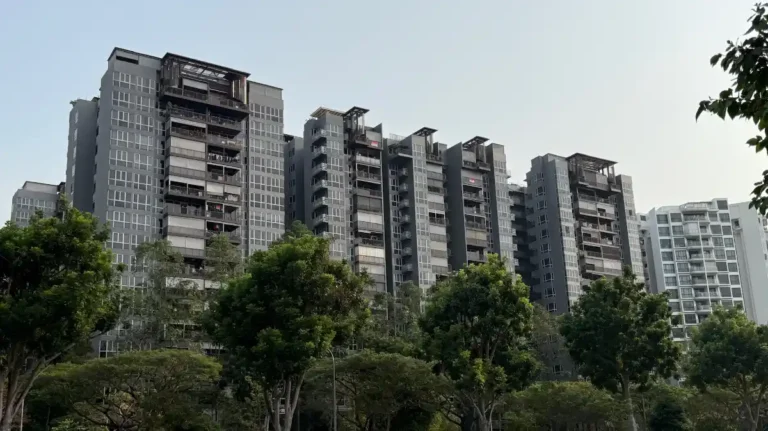
A decade ago, buying a condo built directly above a shopping mall, bus interchange or MRT station felt unusual in Singapore. Today, it’s one of the most sought-after housing categories — particularly outside the central region.
If you’re exploring new launches in 2026 and 2027, “mixed-use” or “integrated development” will come up often. This guide covers what these terms actually mean, why the format has grown so quickly in Singapore, the established projects worth knowing, the trade-offs buyers should weigh up, and the upcoming launches in this category to watch.
In a Nutshell
- Mixed-use developments combine residential with commercial uses — typically retail at lower levels and homes above.
- They tend to be MRT- or transport-integrated and offer everyday convenience that purely residential condos can’t match.
- Established examples include Bedok Residences, Sengkang Grand Residences, Watertown and Northpoint Residences.
- Upcoming launches in the category include Newport Residences, Zyon Grand and Lucerne Grand.
What Is a Mixed-Use Condo?
In Singapore property terms, a mixed-use development — sometimes called an integrated development — is a single project that combines residential units with one or more non-residential uses on the same site. The most common formula in the heartlands looks like this: retail and food & beverage at the lower levels, residential towers rising above. The MRT station and bus interchange are often directly integrated or just steps away.
This isn’t to be confused with a condo that simply happens to be near a mall. A genuine mixed-use development shares the same site, the same building permission, and often the same developer — with retail, transport and residential designed together from the outset.
The category is broader than just retail-and-residential. Larger mixed-use developments may also include hotels, serviced apartments, offices, community spaces, hawker centres or childcare facilities — effectively turning a single building into a self-contained micro-neighbourhood.
Why Mixed-Use Has Grown in Singapore
Several forces have driven the rise of mixed-use developments in Singapore over the past 10–15 years:
- Decentralisation policy. Singapore has been actively shifting commercial activity out of the CBD into regional hubs like Jurong Lake District, Paya Lebar Central and Punggol Digital District. Mixed-use sites are an efficient way to do this — jobs, homes and amenities all in one parcel.
- Land scarcity. With limited new land available, vertical integration of uses makes economic sense. Building homes above commercial space maximises the use of each plot.
- Lifestyle shift. Younger buyers and dual-income families increasingly value walkable convenience — supermarket runs, F&B, gyms and childcare all on the doorstep rather than a 15-minute drive away.
- Transport integration. Many mixed-use sites are tied to transit hubs. The Land Transport Authority’s land sales increasingly favour developments that integrate seamlessly with public transport.
The result has been a quietly transformative shift in how new condos are designed — particularly outside the central region.
Track Record: Established Mixed-Use Developments in Singapore
To understand mixed-use as a category, it helps to look at completed examples that buyers and tenants have already lived in for years.
Bedok Residences & Bedok Mall
One of the earliest large-scale modern examples in the heartlands. Developed by CapitaLand, Bedok Mall opened in December 2013 and Bedok Residences was completed in June 2015, with eight 15-storey residential blocks and 583 units sitting above the three-storey mall. The development is directly integrated with Bedok MRT (East-West Line) and the Bedok Bus Interchange. It was the first major shopping mall in Bedok — Singapore’s largest residential estate — and helped redefine what a suburban mixed-use development could look like.
Sengkang Grand Residences & Sengkang Grand Mall
Sengkang Grand Residences was completed in 2023, comprising 680 residential units across nine blocks atop a 300,000 sq ft retail mall. It’s integrated with Buangkok MRT (North-East Line), an air-conditioned bus interchange, a community club, a hawker centre and a childcare centre — effectively a self-contained heartland hub. The development was co-developed by CapitaLand and City Developments Limited (CDL), and went on to win the Sustainability Award in the completed mixed-use development category at the EdgeProp Excellence Awards 2024.
Notably, Sengkang Grand Residences was fully sold by August 2022, about three years after launch — a strong indicator of buyer appetite for well-integrated heartland mixed-use developments.
Watertown & Waterway Point
In Punggol, Watertown was an early signature of the “mixed-use heartland hub” concept — integrating residential blocks with the Waterway Point mall and Punggol MRT/LRT. Completed in 2017, it set a tone for what Punggol Town would later become.
Northpoint Residences & Northpoint City (and North Park Residences)
In Yishun, Frasers Property’s Northpoint City extended the original Northpoint Shopping Centre into one of the largest malls in northern Singapore, with North Park Residences sitting above the new wing. Completed in 2018, it’s a strong example of how mixed-use can be retrofitted onto an existing town centre.
Other notable examples include Hillion Residences in Bukit Panjang (atop Hillion Mall, integrated with Bukit Panjang LRT and Downtown Line), Park Place Residences @ Paya Lebar Quarter, and One Holland Village Residences. Across the city, the pattern is clear: mixed-use is no longer a novelty.
What Buyers Tend to Value in Mixed-Use Condos
From observation of completed projects, a few things tend to draw buyers to mixed-use developments:
- Daily convenience. Groceries, F&B, pharmacies, services — all without leaving the development. For dual-income families and time-poor professionals, this is genuinely valuable.
- Weather-proof living. In a tropical climate, a sheltered walk from lift to mall to MRT is more than a luxury — it’s practical comfort.
- Built-in tenant demand. The convenience that appeals to owner-occupiers also tends to appeal to tenants. That said, rental performance varies project by project; integration alone doesn’t guarantee yield.
- A defined community. Mixed-use developments often have community spaces, hawker centres or childcare on site — turning the building into a small neighbourhood rather than just a collection of homes.
It’s also worth noting what mixed-use does not automatically guarantee. Price premiums, capital growth, and rental yields all depend on the broader market, the specific project, the quality of the retail tenant mix, and the area’s long-term trajectory. Mixed-use is a strong feature — not a magic ingredient.
The Trade-Offs to Weigh Up
Honesty matters here. Mixed-use developments come with considerations that purely residential condos don’t:
- Foot traffic. Ground-floor retail brings activity — which is convenient by day and a consideration at night. Most projects manage this with separate residential lifts and gated access, but it’s worth understanding the layout.
- Retail tenancy risk. A mixed-use development is only as good as its mall. If the retail mix struggles or anchor tenants leave, that lifestyle convenience can erode over time.
- Service charges. Mixed-use developments sometimes have more complex management requirements, though this varies considerably and isn’t universal.
- Unit choice. Within a mixed-use project, stacks closest to the retail podium may have different noise and outlook characteristics than higher floors facing away from the activity. Stack selection matters.
None of these are dealbreakers — but they’re worth thinking about before committing.
Looking Ahead: Upcoming Mixed-Use Launches to Watch
Several new launches in the mixed-use category are either recently launched or coming to market over the next 12–24 months. Three worth knowing about:
Newport Residences
Newport Residences by CDL is part of the Newport Plaza integrated development at the former Fuji Xerox Towers site on Anson Road in District 2. Combining residential, office and serviced apartment uses on one site, it’s a CBD-fringe example of large-scale vertical integration — bringing mixed-use to the city core rather than the heartlands.
Zyon Grand
Zyon Grand by CDL anchors part of the former Liang Court redevelopment along River Valley Road in District 9. The site combines residential with hotel and serviced apartments, and sits in one of Singapore’s most established lifestyle districts — another example of mixed-use stretching beyond the heartland model.
Lucerne Grand
Lucerne Grand by CDL is an upcoming 99-year leasehold mixed-use development on Lakeside Drive in District 22, beside Lakeside MRT. It will feature Level 1 retail under five residential towers — and is positioned as the first mixed-use development in its immediate Lakeside precinct, sitting adjacent to the Jurong Lake District’s ongoing transformation. For a deeper project-specific look, visit the dedicated site at lucernegrandsg.com.
What these three projects share is a common pattern: established developers (in this case, CDL has co-developed Sengkang Grand Residences and brings that mixed-use experience forward), strong transport access, and locations chosen to align with broader Singapore growth narratives.
How to Evaluate a Mixed-Use Launch
If you’re considering a mixed-use launch, a few questions tend to separate the strong projects from the merely well-marketed ones:
- Is the integration genuine? Look for shared site permission, single-developer planning, and physical connection — not just “mall next door.”
- What does the retail mix look like? A supermarket, pharmacy, daily F&B and services anchor a development. A mall full of unfamiliar boutiques doesn’t.
- Who’s the developer — and have they done this before? Mixed-use is genuinely harder than residential-only. Experience shows.
- How does the transport integration actually work? A direct lift to MRT is different from a five-minute covered walk. Both can be valuable, but they’re not the same.
- What does the surrounding precinct look like in 5–10 years? Mixed-use projects benefit from being early movers in evolving precincts — or, conversely, from being established anchors in mature ones.
The Bottom Line
Mixed-use condos have moved from novelty to mainstream in Singapore. Developments like Bedok Residences and Sengkang Grand Residences have demonstrated that buyers and tenants will pay for genuine integration — not just proximity, but a thoughtful blend of home, retail, transport and community on the same site.
For buyers exploring new launches in 2026 and 2027, the category is worth understanding on its own terms — before evaluating any one specific project. Whether it’s a CBD-fringe development like Newport Residences, a city-fringe redevelopment like Zyon Grand, or a heartland-adjacent launch like Lucerne Grand, the underlying question is the same: does this particular mixed-use project, in this particular precinct, fit your long-term plan?
Exploring mixed-use new launches in Singapore? We’d be happy to help you compare options.
WhatsApp UsBrowse our full List of New Launches or get in touch via our contact page.
Sources: Public information on Bedok Residences (CapitaLand), Sengkang Grand Residences (CapitaLand & City Developments Limited), Watertown, Northpoint City, and other Singapore mixed-use developments as at June 2026. Upcoming launch information reflects publicly released materials from the respective developers and marketing agencies. All project information is subject to change and does not form part of an offer or contract. Property investment outcomes depend on many factors and historical patterns are not guarantees of future performance.